Professional Soot Removal in Denver CO
Soot spreads fast after a fire – bonding to walls, ceilings, and surfaces within minutes and moving through your HVAC system before the smoke clears. Denver homeowners and businesses need soot removed quickly before odor and staining become permanent. Kinrest Property Restoration serves residential and commercial properties across the Denver metro. Call now to schedule your assessment: (855) 933-7926
We Are Available 24/7 for Soot Removal in Denver CO. Call (855) 933-7926 for Immediate Response!
- Licensed and Certified
- 24/7 Service Available
- 100% Satisfaction Guarantee
- We Keep Your Family Safe
In Denver, house fires and kitchen fires leave soot that spreads quickly through HVAC systems and onto every surface in a home or building. Our team at Kinrest Property Restoration handles professional soot removal – walls, ceilings, contents, and air quality restoration – for properties across the Denver metro. When you call us, we start with a clear assessment so you know exactly what cleanup involves. Because we also handle water damage restoration, we can take care of full fire and smoke damage restoration from a single crew.
What Soot Is and Why It Spreads Through Denver Homes So Fast
Soot is a fine black residue produced when materials burn. It bonds to walls, ceilings, and fabric within minutes of a fire starting. The faster you call for help, the more surfaces can be saved.
Denver’s dry climate keeps soot particles airborne longer than in humid regions. That means particles travel farther through a home before settling – spreading contamination well beyond the room where the fire started. Older Denver homes, particularly those in Capitol Hill with open floor plans and aging ductwork, see faster spread because of how air moves through the structure.
Denver’s high altitude also plays a role. At elevation, fires experience less available oxygen. Incomplete combustion is more common here than at sea level, which produces heavier, oilier soot deposits that bond more aggressively to surfaces.
How Does Soot Removal Work in Denver?
Soot is a black, oily residue left by incomplete combustion. It clings to porous surfaces and spreads through air ducts. In Denver, dry air makes soot particles lighter and more airborne, allowing them to travel farther through a structure before settling.
1. Assess the Affected Area and Air Quality
We inspect every room, not just the room where the fire started. Soot travels, so the assessment maps the full extent of contamination before any cleaning begins.
2. Seal Off HVAC Vents to Stop Further Spread
Running your HVAC after a fire pushes soot particles into every room connected to the ductwork. Sealing vents immediately contains the damage to the affected areas.
3. Apply Dry Chemical Sponges to Lift Loose Soot
Dry sponges pull soot off walls and ceilings without smearing or pushing particles deeper into the material. This step has to come before any wet cleaning is applied.
4. Use Professional-Grade Cleaners on Walls and Ceilings
Once loose soot is removed, industrial degreasers break down the oily residue left behind. Standard household cleaners are not strong enough and can cause streaking.
5. Clean or Replace Air Filters
Filters capture soot particles during a fire and become heavily loaded. A clogged filter left in place will re-release particles into the air as soon as the system runs again.
6. Run HEPA Air Scrubbers to Clear Airborne Particles
HEPA scrubbers pull fine soot particles from the breathing zone that dry sponges and cleaning cannot reach. In Denver’s dry air, this step is necessary to bring particle counts down to safe levels.
7. Inspect Framing and Insulation for Hidden Soot Deposits
Soot migrates into wall cavities, attic insulation, and structural framing during a fire. Hidden deposits cause persistent odor and air quality problems if left untreated.

How Professionals Remove Soot From Walls, Ceilings, and Surfaces
Our crews use dry chemical sponges first to lift loose soot off surfaces without smearing. Once loose particles are removed, we apply industrial degreasers to break down remaining staining on walls and ceilings.
DIY methods like dish soap or vinegar are not designed for soot. They can push particles deeper into porous surfaces and cause streaking that makes restoration harder. Our Denver crews carry HEPA air scrubbers that run throughout the cleaning process to capture airborne particles and keep them from resettling on cleaned surfaces.
Denver’s stucco and brick exteriors require specialized cleaning agents. Colorado’s freeze-thaw cycle puts stress on masonry, and standard degreasers can cause surface damage. We use agents rated for masonry that clean effectively without weakening the material.
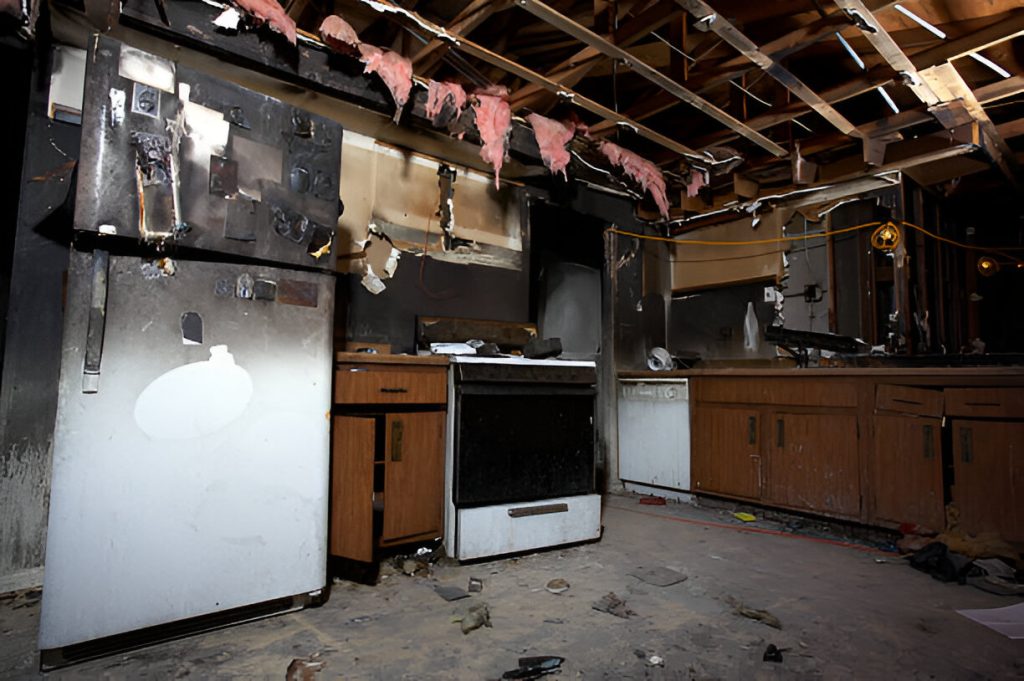
Do not wipe soot with wet cloths or household cleaners. Moisture activates soot’s oily residue and drives it deeper into walls and surfaces.
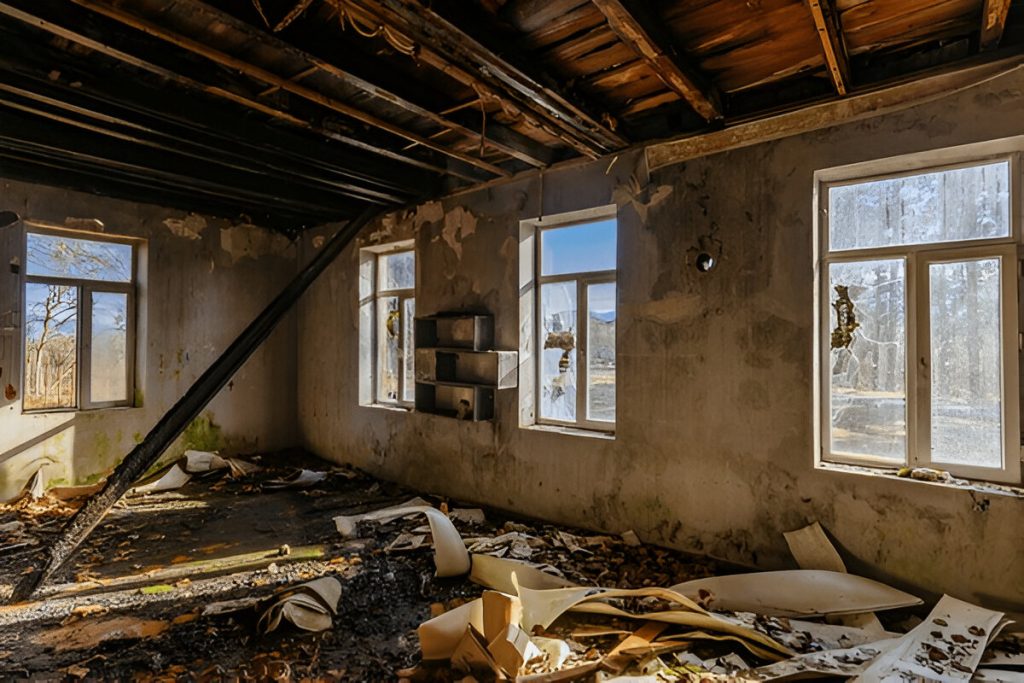
Call Kinrest Property Restoration for Professional Soot Removal in Denver Metro Area.
When to Call a Soot Removal Crew Instead of Cleaning It Yourself
Call a professional soot removal crew when soot covers more than one room, has entered the HVAC system, or has been sitting for more than 24 hours. Soot that dries and oxidizes bonds permanently to drywall and wood – the window for full surface restoration closes fast.
Denver property owners often discover that soot has spread into adjoining rooms before they can locate the source of the fire. By the time the smoke clears, multiple surfaces may already be affected.
Colorado property owners carry legal responsibility for safe remediation of fire damage. Improper cleanup – especially removing contaminated materials without following proper containment procedures – can complicate insurance claims and delay settlement. Professional documentation of the damage and the cleanup process protects you throughout that process.
What Denver Property Owners Should Do Before the Cleanup Crew Arrives
The most important step you can take right now is to turn off your HVAC system. Every minute it runs after a fire circulates soot through the ductwork and onto clean surfaces throughout the building.
Do not wipe walls or ceilings. Dry soot smears quickly when agitated, and that smearing sets staining deeper into the surface. Leave contaminated surfaces untouched until our crew arrives.
If it is safe to do so, open windows to allow some air exchange. Move pets and children out of affected areas immediately. Our crews arrive with full containment equipment and PPE to protect both the unaffected areas of your property and anyone remaining on-site.
Denver’s altitude slows indoor air recovery after a fire. The thin, dry air does not carry particles out of a space the way humid air at lower elevations can. Mechanical HEPA filtration is a required step in every soot removal we perform here – not an optional add-on.
How Soot Affects Indoor Air Quality and What Restoration Fixes
Soot particles are small enough to enter the lungs directly. Exposure causes respiratory irritation in otherwise healthy adults and poses a higher risk for children, elderly residents, and anyone with asthma or chronic respiratory conditions. The space is not safe to occupy until particle counts are confirmed clear.
Our restoration teams run commercial HEPA air scrubbers and set up negative air pressure systems during cleanup. Negative air pressure keeps contaminated air from moving into unaffected areas of the building while the scrubbers pull particles from the breathing zone.
Denver already deals with seasonal wildfire smoke that affects outdoor air quality. After an interior fire, the indoor particle load is far higher – and because the structure is sealed, those particles have nowhere to go without active mechanical removal. For households with vulnerable occupants, post-fire soot removal should be treated as urgent.
At the close of every job, our certified crews perform a final air quality test and visual inspection. You receive written clearance documentation confirming the space is safe to reoccupy.
Soot removal is one part of our complete fire damage restoration services.
Frequently Asked Questions
Can I clean soot myself with dish soap or household cleaners?
Household cleaners smear soot deeper into surfaces rather than lifting it. Professional dry-sponge methods remove loose soot first before any wet cleaning is applied – skipping that step pushes contamination further into drywall, fabric, and other porous materials.
How long does soot stay in the air after a fire in Denver?
Soot particles can stay airborne for hours after a fire, and Denver’s dry, low-humidity air keeps particles suspended longer than in more humid climates. Running commercial HEPA air scrubbers is the most effective way to clear particles from the breathing zone and accelerate safe reoccupancy.
What surfaces are hardest to restore after soot damage?
Porous materials – drywall, upholstered fabric, and insulation – absorb soot quickly and are the hardest to fully restore. Success depends directly on response time. The longer soot sits in those materials, the more likely they are to require replacement rather than cleaning.
Do I need to leave my home during soot removal?
Our crews use containment barriers to isolate the work area, so full evacuation is not always required. However, occupants with respiratory conditions – including asthma, COPD, or allergy sensitivities – should stay elsewhere during active air scrubbing to avoid irritation from particles disturbed during cleanup.
Will my insurance cover professional soot removal in Denver?
Most standard homeowner and commercial property policies cover fire and smoke damage cleanup, including professional soot removal. Document all visible damage with photos before our crew starts work, and file your claim promptly. We can provide detailed documentation of the scope of work to support your claim.
How do I know when soot cleanup is complete?
Cleanup is complete when our certified crew performs a final air quality test and visual inspection confirming all affected surfaces have been treated and particle counts have returned to safe levels. We provide written clearance documentation before closing the job – you have a record on file for your insurance company and for your own records.
Kinrest Property Restoration of Denver 851 CO-224 Unit A9, Denver, CO 80229 (855) 933-7926 Available 24/7