Water Heater Leak Cleanup in Denver - Stop the Damage Before It Spreads
Water heater leak cleanup in Denver, CO – Kinrest Property Restoration responds 24/7 to extract standing water, dry floors and walls, and stop secondary damage before it spreads. Call (855) 933-7926 now.
We Are Available 24/7 for Water Heater Leak Cleanup Services in Denver CO. Call (855) 933-7926 for Immediate Response!
- Licensed and Certified
- 24/7 Service Available
- 100% Satisfaction Guarantee
- We Keep Your Family Safe

In Denver, water heater leaks are a leading cause of indoor water damage. This page covers what water heater leak cleanup is, what materials get damaged, and when to call a restoration team. Service is available for basements, utility closets, and mechanical rooms throughout the Denver area. Professional water damage restoration removes water completely – not just on the surface – so walls, floors, and cabinets dry correctly.
What Is Water Heater Leak Cleanup in Denver?
Water heater leak cleanup in Denver is the process of removing water, drying structural materials, and treating affected areas after a water heater fails or leaks. Restoration teams use industrial extractors and air movers to dry floors, walls, and subfloors that absorbed the leak. The goal is to return the space to a dry, safe condition before mold can form.
The process includes:
- Extract standing water from the floor and surrounding areas
- Dry wall cavities, flooring layers, and framing with commercial equipment
- Test moisture levels and document drying progress for insurance
A Leaking Water Heater Is a Water Damage Emergency - Not Just a Plumbing Problem
A water heater holds 40 to 80 gallons of water. When it leaks, that water moves fast into flooring, drywall, and wall cavities. A plumber can stop the leak at the source, but they do not dry the structure. Water damage restoration is a separate service that handles what stays behind after the plumber leaves.
If you are a Denver homeowner, landlord, or property manager and you notice pooling water, warped flooring, or a damp smell near a utility closet or basement mechanical room – that is a restoration call, not just a plumbing call. Calling our team within the first few hours limits how far moisture spreads. That reduces total damage and cuts drying time.
Denver’s low humidity can work against you here. Surfaces dry on the outside quickly, which makes it easy to assume the problem is gone. But moisture trapped inside walls and under floors keeps spreading while the surface looks fine.
How to Tell If Your Water Heater Has Caused Hidden Water Damage
Not every leak is visible. Water from a slow drip travels under flooring, into wall framing, and along concrete slabs before any surface sign appears. Soft spots underfoot, peeling paint near the base of walls, and a musty odor near the unit are early indicators. A moisture meter confirms what the eye misses.
This situation is common with Denver homeowners who noticed a past leak, had a plumber repair the unit, and assumed the job was done. If any moisture remained in the structure, it has been working against you since. Identifying hidden moisture early prevents mold growth and structural softening – both of which get more expensive the longer they go unaddressed.
In older Washington Park and Park Hill homes, original hardwood floors and plaster walls absorb water quickly. They also hide moisture longer than modern materials, which makes professional moisture testing especially worth doing in those properties.

What Water Heater Leak Cleanup Actually Involves
Cleanup starts with water extraction. We use truck-mounted or portable vacuums to pull standing water from hard floors and carpet. From there, our technicians set commercial air movers and dehumidifiers to dry wall cavities and subfloors. Affected drywall or flooring that cannot dry in place is removed. Moisture readings are logged daily until all readings return to baseline.
If you want to know what to expect before our crew arrives, that is the process. It follows IICRC S500 drying standards, and all documentation supports your insurance claim. When we close out a job, you have written proof the space is fully dry – not just an estimate.
Denver’s altitude affects how drying equipment performs. At 5,280 feet, lower air pressure changes evaporation rates and affects both refrigerant and desiccant dehumidifiers. Our crews calibrate equipment for Denver conditions to hit target drying times – this is not something every out-of-area company accounts for.

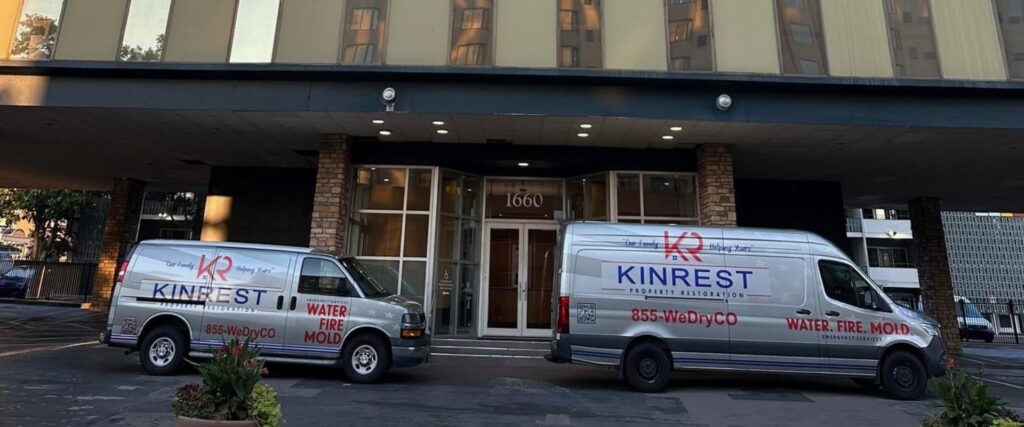
Call Kinrest Property Restoration for Water Heater Leak Cleanup Services in Denver Metro Area.
Why Denver Homes Are Especially Vulnerable to Water Heater Leak Damage
Many Denver homes were built with finished basements used as living space. Water heaters placed in finished basements put carpet, drywall, insulation, and personal belongings directly in the path of any leak. A single tank failure can saturate an entire basement level before the homeowner notices anything is wrong.
In neighborhoods like Highlands, Sloan’s Lake, and Harvey Park, finished basements are a standard feature of the housing stock. Our crews are familiar with Denver basement layouts. We protect unaffected areas during the job and focus extraction where moisture actually traveled.
Denver’s freeze-thaw season runs from November through March. Temperature swings during that period increase stress on aging water heater components – particularly pressure relief valves, fittings, and tank walls. Leak risk rises during the coldest months, and a failure during a cold snap can go unnoticed longer if the basement is not used daily.
Water Heater Leaks and Mold: What Denver Homeowners Need to Know
Mold can begin growing on wet drywall and wood framing within 24 to 48 hours of a water event. A water heater leak that is not fully dried creates the exact conditions mold needs – moisture, organic material, and limited airflow. Mold remediation after the fact costs significantly more than drying done correctly the first time.
If you discovered a water heater leak days or weeks after it began – or if you smell something musty near a utility area – the window for straightforward drying may have passed. We can assess what is present and advise on next steps, which may include mold remediation in addition to structural drying.
Denver’s semi-arid climate does not prevent indoor mold growth. Enclosed mechanical rooms and basement spaces stay humid long after a leak if they are not actively dried. Outside air being dry does not change what is happening inside a sealed wall cavity.
How Insurance Typically Handles Water Heater Leak Cleanup in Denver
Most homeowner insurance policies in Colorado cover sudden and accidental water damage from a water heater failure. Slow leaks that went undetected for months are often denied as a maintenance issue. The distinction matters, and documentation is the deciding factor.
Restoration companies document damage with moisture readings, photos, and drying logs – the same records your adjuster needs to process a claim. Accurate documentation from a licensed restoration company supports faster claim decisions and reduces the chance of a dispute.
If your carrier denies a water damage claim in Colorado, the Colorado Division of Insurance requires them to explain the denial in writing under state law. You have the right to request a formal review of that decision. We are not insurance advisors, but we can provide the documentation that gives your claim the best foundation.
Part of our complete property restoration services in Denver.
Frequently Asked Questions
How Urgent Is a Water Heater Leak in Denver?
Treat it as immediate – water spreads under floors and into walls within hours. The longer cleanup waits, the more materials are affected and the harder drying becomes. Call a water damage restoration team the same day you discover the leak.
Should I Turn Off the Water Supply If My Water Heater Is Leaking?
Yes – shut off the cold water inlet valve to the heater first to stop new water from entering the tank. Then call a plumber to address the unit and a water damage restoration team to handle what already soaked into your floors and walls.
Can a Water Heater Leak Cause Mold in My Denver Home?
Yes – mold can begin growing on wet drywall and wood within 24 to 48 hours if the area is not fully dried with professional equipment. Denver’s enclosed basement and utility spaces give mold the limited airflow it needs to take hold quickly.
Will a Leaking Water Heater Eventually Burst?
A failing tank under pressure can rupture. If a leak is active, shut off water and power to the unit – gas or electric – and call for cleanup and replacement. Do not leave an actively leaking tank running.
Does Homeowner Insurance Cover Water Heater Leak Cleanup in Denver?
Sudden and accidental failures are typically covered under standard Colorado homeowner policies. Slow leaks attributed to deferred maintenance are often not. Documentation from a licensed restoration company gives your claim the best chance of a clean approval.
How Do I Know If My Water Heater Leak Caused Hidden Damage?
Soft flooring near the unit, peeling paint at the base of walls, and a musty odor are the most common warning signs. A moisture meter reading is the only way to confirm hidden saturation – surface appearance is not reliable, especially in Denver where low outdoor humidity dries surfaces fast while moisture stays trapped inside.
Kinrest Property Restoration of Denver 851 CO-224 Unit A9, Denver, CO 80229 (855) 933-7926 Available 24/7