Commercial Fire Damage Restoration in Denver - Get Your Business Back Open Fast
Fire damage shuts down operations fast. Commercial fire damage restoration in Denver covers smoke, soot, structural damage, and water left by suppression systems. Local crews respond quickly to protect inventory, equipment, and building structure. Call now to start the assessment and get a restoration timeline for your business. (855) 933-7926
We Are Available 24/7 for Commercial Fire Damage Restoration in Denver CO. Call (855) 933-7926 for Immediate Response!
- Licensed and Certified
- 24/7 Service Available
- 100% Satisfaction Guarantee
- We Keep Your Family Safe
In Denver, commercial fires can strike warehouses, offices, restaurants, and retail spaces year-round. This page covers full-scope commercial fire damage restoration – structural cleanup, smoke odor removal, soot cleaning, and water damage from firefighting efforts. Our licensed restoration crews assess damage fast and coordinate with your insurance adjuster. The result is a faster reopening, a documented recovery process, and reduced secondary damage – delivered by a water damage restoration service with commercial fire experience.
What Commercial Fire Damage Restoration Covers
Fire damage to a business goes beyond burned surfaces. Smoke infiltrates HVAC systems, soot coats inventory, and water from suppression systems soaks subflooring and drywall. Restoration covers structural repairs, smoke and odor removal, content cleaning, and water damage from firefighting efforts.
Denver businesses – from LoDo restaurants to RiNo warehouses – face all four damage types in almost every commercial fire event. Faster scope documentation means faster insurance approval and faster reopening. Denver’s dry climate causes smoke particles to travel farther through open-plan commercial spaces, expanding the affected zone beyond the fire’s origin point.
Why Denver Businesses Need Specialized Fire Restoration Teams
Commercial properties require different equipment, certifications, and coordination than residential fire jobs. Larger square footage, industrial HVAC systems, and code compliance all add complexity that a general contractor without fire restoration training may miss. Hidden smoke damage and OSHA re-occupancy standards are easy to overlook without specialized experience.
In Denver, businesses in mixed-use buildings near Capitol Hill face shared-wall smoke migration that can affect neighboring tenants. Specialized teams document damage in the format adjusters require, cutting claim delays. Colorado’s altitude also affects negative air pressure equipment used during smoke containment – our crews calibrate for Denver’s elevation.
How The Commercial Fire Restoration Process Works Step By Step
Step 1: Emergency Stabilization
The moment we arrive, we secure your property. That means boarding up openings, tarping exposed rooflines, and stopping any active water intrusion from suppression systems.
Step 2: Damage Assessment and Documentation
We walk the entire property to map fire, smoke, soot, and water damage. Every affected area is photographed and logged in a format your insurance adjuster can use immediately.
Step 3: Water Extraction and Structural Drying
Water from firefighting efforts is extracted and drying equipment is placed throughout the building. In winter months, Denver’s freeze-thaw cycles require close monitoring to keep drying timelines on track.
Step 4: Soot, Smoke, and Odor Removal
Soot is cleaned from all surfaces – including HVAC systems, walls, and contents. Denver’s older commercial districts like Globeville and Elyria-Swansea often have building materials that require adjusted cleaning protocols to fully remove smoke penetration.
Step 5: Structural Repair and Clearance Testing
Damaged structural elements are repaired and rebuilt. Final air quality and clearance testing confirms the space meets re-occupancy standards before we hand the property back to you.
What To Expect After The Fire Trucks Leave Your Denver Business
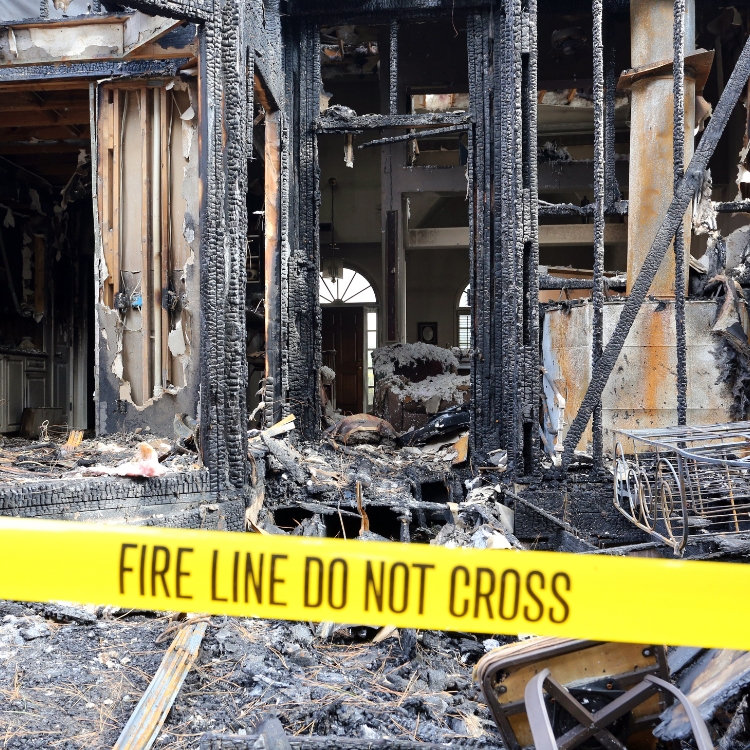
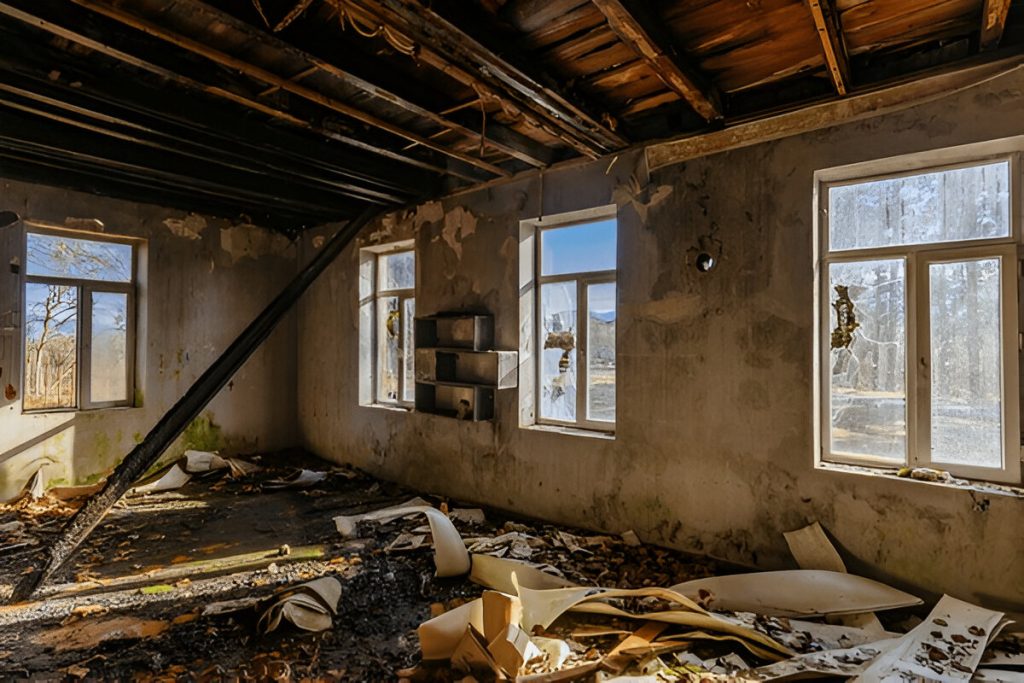
Once the fire department clears the scene, a restoration crew should enter within hours – not days – to prevent secondary damage from soot corrosion and moisture. Expect an initial walk-through, moisture mapping, air quality testing, and emergency board-up or roof tarping if the structure is exposed.
Denver commercial buildings – from multi-tenant office suites to industrial warehouses – often have large open floor plans that allow soot and smoke to spread quickly across wide areas. Quick action in the first 24-48 hours reduces total restoration scope and cost. Denver’s semi-arid climate dries surfaces fast, which can cause soot to bond aggressively to metals, equipment, inventory, and electronics if not treated immediately.
Do not wipe soot with wet cloths or household cleaners. Moisture activates soot’s oily residue and drives it deeper into walls and surfaces.
Call Kinrest Property Restoration for Commercial Fire Damage in Denver Metro Area.
How To Work With Your Insurance Adjuster During Restoration
Most commercial property insurance policies cover fire, smoke, and water damage from suppression systems – but documentation quality determines how fast claims are approved. Our team photographs damage, logs moisture readings, and submits reports in adjuster-ready formats.
Denver businesses operating under commercial leases may also have landlord insurance coordination requirements that affect the restoration timeline. Starting restoration before the adjuster visits is often allowed – and often recommended to prevent further loss – when the process is properly documented. Colorado’s Division of Insurance regulates claim timelines, and our crews are familiar with Denver adjusters and can flag delays when needed.
When To Start Restoration - And Why Waiting Costs More
Delaying restoration by even 24-48 hours allows soot to permanently stain surfaces, smoke odor to bond into HVAC systems, and moisture to begin mold growth. Every day a commercial property sits unrestored is a day of lost revenue, extended insurance claims, and compounding secondary damage.
In Denver’s Capitol Hill and Baker neighborhoods, older brick commercial buildings absorb smoke faster than newer construction – making rapid response even more critical. Our emergency response teams are available around the clock and can begin stabilization the same night as the fire. Denver’s winter temperatures can also cause burst pipes in fire-damaged buildings where heating systems are disrupted, adding a second wave of water damage if crews don’t respond fast.
What Is Commercial Fire Damage Restoration In Denver?
Commercial fire damage restoration is the process of cleaning, repairing, and rebuilding a business property after fire, smoke, or firefighting water causes damage. It covers more than visible char – soot penetrates HVAC systems, smoke odor soaks into walls, and water from suppression systems can cause mold within 48 hours. In Denver, altitude and dry air can accelerate soot spread and smoke absorption into porous materials.
- Structural assessment and emergency board-up
- Smoke, soot, and odor removal from all surfaces
- Water extraction and drying from suppression system discharge
We handle all aspects of commercial fire damage restoration in Denver.
Frequently Asked Questions
How Quickly Can A Restoration Crew Reach My Denver Business After A Fire?
We offer 24/7 emergency response and can be on-site within hours of the fire department clearing the scene. Around-the-clock availability means we can begin stabilizing your business the same night as the fire.
Do I Need To Wait For My Insurance Adjuster Before Starting Restoration?
No – you do not need to wait for your adjuster before starting restoration. Document everything and begin emergency stabilization immediately. Most policies allow mitigation work to start right away to prevent further loss.
Can Smoke Damage In The HVAC System Affect The Rest Of My Building?
Yes – smoke travels through ductwork and can spread soot and odor to unaffected floors or neighboring suites. HVAC cleaning is a standard part of commercial fire damage restoration and should not be skipped.
What Is The Difference Between Remediation And Restoration For Commercial Fire Damage?
Remediation removes hazardous materials and contaminants, while restoration repairs and rebuilds the structure. Most commercial fire jobs require both, performed in sequence, before the property can be safely re-occupied.
How Long Does Commercial Fire Damage Restoration Take For A Denver Business?
The timeline depends on the scope of damage. Small office fires may resolve in days, while large warehouse fires can take weeks. Your restoration crew will provide a phase-by-phase schedule after the initial assessment.
Will My Denver Business Need To Close Completely During Restoration?
Not always. Restoration crews can often section off damaged areas and allow partial operations to continue in unaffected parts of the building. We assess each property individually and work to minimize disruption to your operations.
Kinrest Property Restoration of Denver 851 CO-224 Unit A9, Denver, CO 80229 (855) 933-7926 Available 24/7