Sewage Backup Cleanup in Denver - Fast, Safe & Thorough
Raw sewage in your home is a biohazard. It needs to be handled right away by trained professionals. Kinrest Property Restoration provides professional sewage backup cleanup in Denver – removing bacteria, stopping odor, and restoring safe living conditions fast. DIY cleanup puts your family at serious risk. Call us now for same-day response: (855) 933-7926.
We Are Available 24/7 for Sewage Backup Emergencies in Denver CO. Call (855) 933-7926 for Immediate Response!
- Licensed and Certified
- 24/7 Service Available
- 100% Satisfaction Guarantee
- We Keep Your Family Safe

In Denver, sewage backups happen fast and spread quickly through lower floors. A floor drain overflow, toilet backup, sewer line failure, or basement flood can turn into a serious health hazard within hours. Our sewage backup cleanup service covers everything – extraction, disinfection, drying, and deodorizing. Trained crews arrive fast with full protective gear and commercial equipment. We take your home from biohazard to clean and safe, start to finish.
Sewage Backup Is a Biohazard That Needs Professional Cleanup
Raw sewage contains bacteria, viruses, and parasites that can make your family sick fast. Even brief contact with sewage waste can cause serious health problems. This is not a cleanup job for rubber gloves and paper towels.
Denver homes with finished basements face higher risk. When floor drains back up, contaminated water spreads across flooring and into walls quickly. Neighborhoods like Capitol Hill and Baker have older sewer lines that are more likely to back up during heavy rain.
Our crews arrive in full protective gear and use EPA-approved disinfectants on every affected surface. We treat every sewage backup as a biohazard from the moment we walk in – because that’s exactly what it is.
How the Sewage Backup Cleanup Process Works
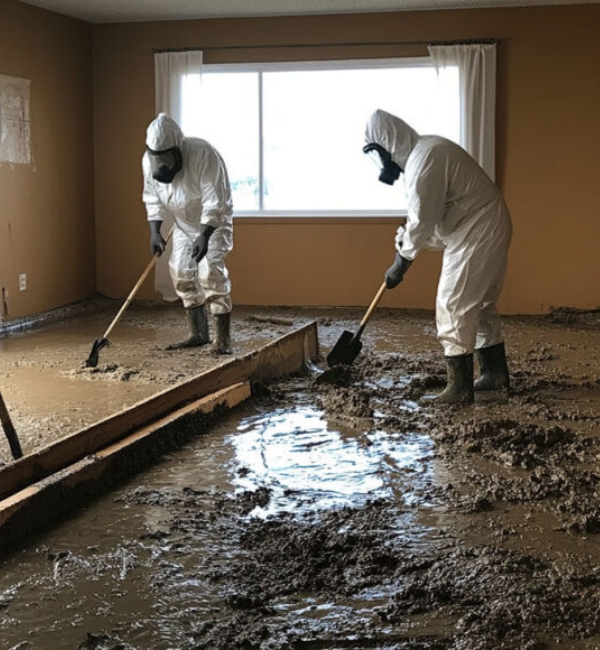
Sewage backup cleanup in Denver starts the moment our crew arrives. We assess the source of the backup and map out every affected area before any work begins. From there, we extract standing sewage water using truck-mounted pumps – fast and completely.
Once the water is out, we remove soaked materials like carpet, drywall, and insulation that can’t be saved. Every hard surface gets disinfected with EPA-approved products. Then we set up industrial dryers and air scrubbers to pull moisture and airborne bacteria out of the space.
Denver’s dry climate works in your favor – it helps speed up drying times after extraction. Most jobs take one to three days depending on the size and severity of the damage. We don’t leave until moisture levels are safe and odor is gone.
Signs Your Denver Home Has a Sewer Backup Problem
Slow or Gurgling Drains
Slow drains and gurgling sounds near floor drains are early warning signs. If multiple drains are slow at the same time, you likely have a main sewer line blockage - not just one clogged pipe.
Sewage Odor in the Home
A sewage smell coming from floor drains or basement areas means waste is backing up somewhere in the line. Don't ignore it - odor is often the first sign before visible water appears.
Tree Root Intrusion
In Denver, tree roots growing into older clay sewer pipes are a leading cause of backups. Roots crack and block pipes over time, and the problem gets worse every season without treatment.
Spring Snowmelt Pressure
Heavy snowmelt in spring puts extra pressure on Denver's storm and sewer systems. Backups spike during this time every year. If your drains slow down in March or April, have your line inspected.
Catching any of these signs early limits how far contamination spreads – and how much material needs to be replaced.
What Surfaces and Materials Can Be Saved After a Sewage Backup
Not everything in your home has to be replaced after a sewage backup. Hard surfaces like concrete, tile, and metal can usually be cleaned and disinfected completely. Our crew treats these surfaces with EPA-approved products and confirms they are safe before we leave.
Porous materials are a different story. Carpet, drywall, and insulation absorb sewage and cannot be fully disinfected. These materials have to come out. Sewage bacteria can survive on surfaces for days, so the faster cleanup starts, the more of your home we can save.
Homes in Wash Park and Platt Park with older basement finishes often require more material removal due to the type of materials used in those builds. Our team knows exactly what can stay and what has to go – and we’ll walk you through every decision before work begins.
How to Prepare Before the Cleanup Crew Arrives
The most important thing you can do right now is stop using water in your home. Do not run any drains, flush toilets, or use appliances connected to the sewer line. This keeps contamination from spreading further.
If you can safely reach your electrical panel, turn off power to any affected areas. Do not enter flooded or contaminated spaces to do this – if it’s not safe, leave it off and let our crew handle it. Keep children and pets out of contaminated areas at all times.
If your Denver home has a crawl space near the affected area, stay out of it. Sewage contamination moves into crawl spaces quickly and is not visible until it becomes a much bigger problem. These simple steps protect your family and help our crew work faster when we arrive.
Call for Professional Sewage Backup Cleanup Help!
What Homeowners Insurance May Cover After a Sewage Backup
Standard homeowners insurance usually does not cover sewage backup damage. Most policies require a separate sewer backup rider or endorsement for that coverage to apply. If you don’t have that rider, you may be paying out of pocket.
Coverage also depends on where the backup originated. Damage from a backup inside your home is treated differently than damage caused by a public sewer line failure. Denver city utilities are not liable for damage caused by public sewer line backups entering private property – that cost falls on the homeowner.
Review your policy now if you haven’t already. Our crew documents all damage thoroughly with photos and detailed reports to support your insurance claim. We work with homeowners every day to make sure the documentation is complete and accurate from the start.
What is Sewage Backup Cleanup in Denver and How Does it Work?
Sewage backup cleanup removes contaminated water and waste from your home after a sewer line failure, drain overflow, or toilet backup. It covers extraction, surface disinfection, material removal, drying, and deodorizing. In Denver, certified restoration crews treat sewage as a biohazard from start to finish.
Here is how the process works:
- Crew assesses the backup source and all affected areas
- Standing sewage water is extracted with commercial truck-mounted pumps
- Contaminated materials like carpet and drywall are removed
- All hard surfaces are disinfected with EPA-approved products
- Industrial dryers and air scrubbers run until moisture levels are safe
- Final inspection confirms no remaining odor or bacteria
We handle all water and sewage damage restoration in Denver.

Frequently Asked Questions
Is it safe to stay in my Denver home during sewage backup cleanup?
No – sewage is a biohazard and your home is not safe to occupy during cleanup. All residents should leave and stay away until cleanup and testing are complete.
How long does sewage smell last after a backup is cleaned up?
Odor clears within 24 to 48 hours after proper disinfection and drying are complete. If the smell lingers beyond that, bacteria are still present and additional treatment is needed.
Can I clean up a sewage backup in my Denver home myself?
We don’t recommend it. Raw sewage contains dangerous pathogens that require professional-grade protective gear and commercial equipment to handle safely. Standard cleaning products are not enough.
How long do sewage bacteria survive on floors and walls?
Some bacteria survive for days to weeks on surfaces after a backup. Disinfection has to reach every affected area – not just what’s visible – to fully eliminate the risk.
Does Denver homeowners insurance cover sewage backup damage?
Usually only if you have a sewer backup rider added to your policy. Check your policy before filing a claim so you know exactly what is and isn’t covered.
How quickly does sewage damage spread after a backup?
Contamination spreads within hours of a backup. The faster cleanup starts, the less material needs to be replaced and the lower your overall restoration costs.
Kinrest Property Restoration of Denver 851 CO-224 Unit A9, Denver, CO 80229 (855) 933-7926 Available 24/7